Cheat sheet
BPC-157
One of the most discussed names in gut and recovery. Volume of conversation is not the same as volume of human trials.
The evidence rail
How to read this- Mechanistic: reached
- Cell research: reached
- Animal research: reached
- Human observational: reached, limited data
- Human clinical trial: not reached
- Established clinical use: not reached
- Evidence
- Limited human dataRung 4 of 6, limited data. People were observed, surveyed, or followed, or given the peptide in a small study with no comparison group. Useful for patterns, silent on cause.
- Status
- Not FDA-approvedNot approved for use as a drug. Often sold as a research chemical.
Why people are talking about it
Recovery and biohacking feeds treat it as a near-universal healing peptide, the name itself means body protection compound, and FDA compounding restrictions have kept it in the headlines.
What has it been studied for?
- Gut lining and injury models, mostly in animals
- Recovery and inflammation conversations in humans, with much thinner clinical data
What we know
- The preclinical literature is large
- It has been named in compounding and committee news
What we don’t
- Robust, replicated human clinical outcomes for the uses people talk about online
What is known about safety
- The FDA lists it among compounding substances that may carry safety risks, citing possible immune reactions, impurities, and limited safety information for the proposed routes
- Published human safety data is very small: an uncontrolled chart review of 16 people with knee pain, and a pilot of 2 people given it by IV
- No serious side effects were reported in those pilots, but studies that small cannot rule out uncommon or long-term harm
- Products sold online as research chemicals are not checked for identity, purity, or sterility
Bottom line
Volume of conversation is not volume of evidence.
Education only. Not medical advice. Not a protocol.
Sources
- Humans, 16 people, retrospective, no comparison groupIntra-articular injection of BPC 157 for multiple types of knee pain (opens in a new tab)Lee and Padgett, Alternative Therapies in Health and Medicine, 2021
- Humans, 2 people, safety onlySafety of intravenous infusion of BPC157 in humans: a pilot study (opens in a new tab)Lee and Burgess, Alternative Therapies in Health and Medicine, 2025
- Review of animal and human workRegeneration or risk? A narrative review of BPC-157 for musculoskeletal healing (opens in a new tab)McGuire and colleagues, Current Reviews in Musculoskeletal Medicine, 2025
- Regulator statementCertain bulk drug substances for use in compounding that may present significant safety risks (opens in a new tab)US Food and Drug Administration, current as of April 2026
We link to the paper, the trial registry, or the regulator, never to a seller. A study type in the label tells you who or what was actually studied.
Spotted an error or a newer study? Tell the editors. Corrections are noted on the page. Our standards.
Keep reading
Related sheets
-
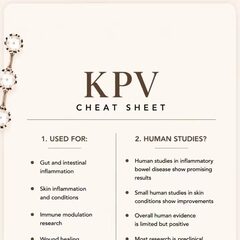 Inflammation
KPV
A fragment of alpha-MSH studied for inflammation and skin. Research so far is in cells and animals.
-
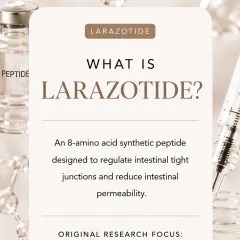 Gut
Larazotide
One of the few names in this space with multiple human trials, studied around celiac and tight junctions.
-
 Nerve / Pain
ARA-290
Studied in nerve pain and inflammation. Small placebo-controlled trials exist. Large ones do not.


Every new sheet, once a month.
One email a month. The study type named, every time.
Send your request to thepepedit@gmail.com. The editors will add you to the list.