Cheat sheet
MOTS-c
A mitochondrial-encoded peptide. The interesting claim is pathway overlap with exercise, not a replacement for it.
The evidence rail
How to read this- Mechanistic: reached
- Cell research: reached
- Animal research: reached
- Human observational: reached, limited data
- Human clinical trial: not reached
- Established clinical use: not reached
- Evidence
- Early human dataRung 4 of 6, limited data. People were observed, surveyed, or followed, or given the peptide in a small study with no comparison group. Useful for patterns, silent on cause.
- Status
- Not FDA-approvedNot approved for use as a drug. Often sold as a research chemical.
- Topics
- MetabolismLongevity
Why people are talking about it
It is often described online as exercise in a vial, and longevity communities are drawn to anything made by the mitochondria.
What has it been studied for?
- Metabolic signaling, including AMPK-related pathways
- Exercise-adjacent biology in early work
What we know
- The analogy to exercise is specific enough to be useful, and easy to overclaim
What we don’t
- Whether that analogy survives larger human studies
What is known about safety
- The FDA says it has not identified any human exposure data for drug products containing MOTS-c, by any route, and does not know whether it would cause harm in people
- The human data that does exist mostly measures the MOTS-c your own body makes, for example after exercise. That is not the same as taking it
- A related drug candidate built on MOTS-c has completed an early safety study, but it is a different molecule
- Products sold online as research chemicals are not checked for identity, purity, or sterility
Bottom line
Shares a pathway with exercise. Does not replace it.
Education only. Not medical advice. Not a protocol.
Sources
- Cells and miceThe mitochondrial-derived peptide MOTS-c promotes metabolic homeostasis and reduces obesity and insulin resistance (opens in a new tab)Lee and colleagues, Cell Metabolism, 2015
- Mice, plus measurements of natural MOTS-c in exercising peopleMOTS-c is an exercise-induced mitochondrial-encoded regulator of age-dependent physical decline and muscle homeostasis (opens in a new tab)Reynolds and colleagues, Nature Communications, 2021
- Early human trial of a related moleculeA phase 1a/1b study of CB4211 in healthy non-obese subjects and subjects with nonalcoholic fatty liver disease (NCT03998514) (opens in a new tab)ClinicalTrials.gov registry entry for a MOTS-c analog, status completed
- Regulator statementCertain bulk drug substances for use in compounding that may present significant safety risks (opens in a new tab)US Food and Drug Administration, current as of April 2026
We link to the paper, the trial registry, or the regulator, never to a seller. A study type in the label tells you who or what was actually studied.
Spotted an error or a newer study? Tell the editors. Corrections are noted on the page. Our standards.
Keep reading
Other sheets
-
 Gut / Recovery
BPC-157
Widely discussed for gut and recovery. The animal literature is large. Human clinical evidence is still thin.
-
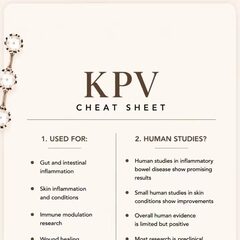 Inflammation
KPV
A fragment of alpha-MSH studied for inflammation and skin. Research so far is in cells and animals.
-
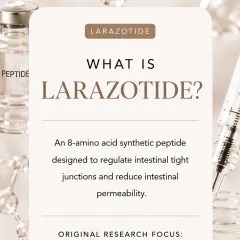 Gut
Larazotide
One of the few names in this space with multiple human trials, studied around celiac and tight junctions.


Every new sheet, once a month.
One email a month. The study type named, every time.
Send your request to thepepedit@gmail.com. The editors will add you to the list.